

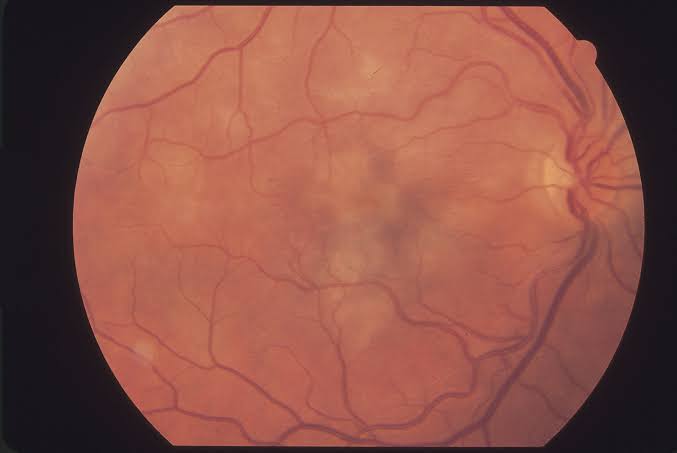

 ☝️APMPPE ( acute Posterior multifocal placoid pigment epitheliopathy )
☝️ serpiginous choriodopathy( SC)
☝️bird shot chorioretinopathy
☝️ multifocal choroiditis with panuveitis ( MCP)
☝️PIC ( punctate inner choriodopathy )
☝️AZOOR ( acute zonal occult outer retinopathy)
☝️acute idiopathic blind spot enlargement syndrome ( AIBSES)
☝️ MEWDS ( Multiple Evanscent White dot syndrome)
 ✍️ APMPPE
☝️age of onset 20–40
☝️sex in (F = M)
☝️Bilateral or sequential
☝️ usually Related to HLA B7, DR2
☝️Mild vitritis
☝️acute lesion Large, geographic, gray-white shallow ( may be confluent)
☝️old lesion pigmented scars within 1–2 weeks resembling Presumed ocular Histoplasmosis
☝️ may be associated with cerebral vasculitis
☝️Rare CNV formation
☝️prognosis Good
☝️ treatment not Indicated
✍️ Serpiginous choriodopathy
☝️ age 30–50
☝️sex F = M
☝️ Bilateral or sequential
☝️ HLA B7 related
☝️ Mild vitiris
☝️ Active lesions geographic, gray-white patches starting peripapillary
☝️ old lesion deep scars with subretinal fibrosis with variable pigmentation
☝️ common complicated with Subretinal scars and 25% CNV
☝️ Poor prognosis
☝️ treated with Steroids when active
✍️ Birdshot ( vitiliginous chorioretinopthy )
☝️ age 40–60
☝️ F> M
☝️Bilateral or sequential
☝️HLA A29
☝️Chronic, moderate vitritis
☝️ active lesion Deep, creamy spots with indistinct margins
☝️ old lesion yellow scars without pigmentation
☝️complicated with CME and rarely CNV
☝️Fair prognosis
☝️Steroids Cyclosporine used with active lesion
☝️ AntiVEGF with CNV
✍️ Multifocal choroiditis
☝️20–50
☝️ F>M
☝️ not HLA related
☝️ Chronic, moderate vitritis and even anterior uveitis
☝️ active lesions 50–350 μm gray-white yellow spots
☝️ old lesion mixture of old scars and new spots
☝️ complicated with CME and 35% CNV
☝️ Fair prognosis
☝️ Steroids used when active
☝️ Anti-VEGF for CNV
✍️ PIC
☝️20–40
☝️ Female
☝️ may be uni or bilaterally
☝️Not HLA related
☝️active lesions 100–300 μm yellow or gray spots
☝️ old lesion punched- out pigmented scars
☝️complicated with Atrophic scars and 40% CNV
☝️Good prognosis
☝️No ttt indicated for active lesion
☝️Anti-VEGF for CNV
✍️ MEWDS
☝️15–50
☝️F>M
☝️Unilateral
☝️Not HLA related
☝️Mild vitritis
☝️active lesions Small, soft, gray- white dots
☝️ old lesion white without scarring
☝️foveal Granularity is pathognomonic
☝️complicated rarely CNV
☝️Good prognosis
☝️Treatment not indicated
✍️ AZOOR and AIBSES
☝️unilateral or bilateral
☝️ F>M
☝️ sudden rapid scotomata with photopsias
☝️ minimal clinical changes initially
☝️ late zonal retinal degeneration/ pigmentary changes( RP- like fashion).
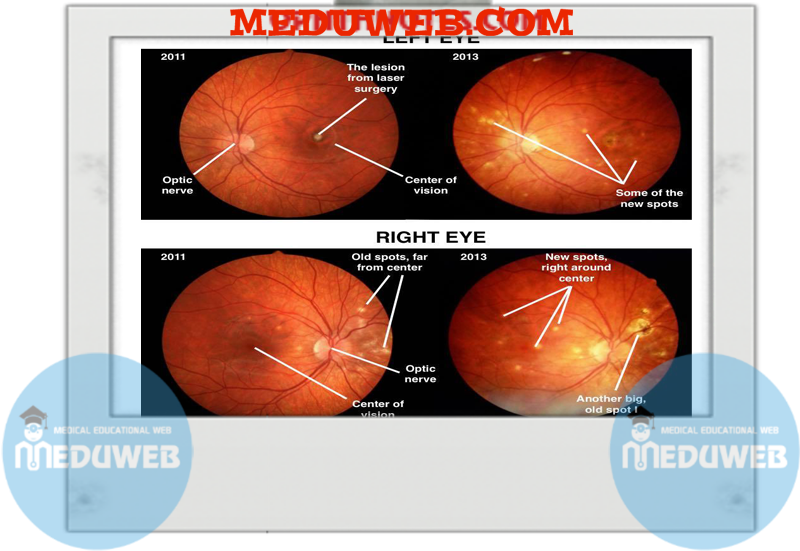
✅white dot syndromes Clinical hints

✍️ The most severe form is Serpegenous due to
☝️ its fulminant course and subretinal fibrosis and CNV formation)
☝️ once diagnosed, u should exclude TB and Syphilis ( may be presented in serpegenous like fashion) especially if associated with vitritis and anterior uveitis)
 ✍️ the best prognosis is MEWDS and always unilateral and may be recurring in the same eye or the other eye after considerable period of time ( never bilateral simultaneously)
✍️ PIC and MCP are the most complicated with CNV
✍️ most of WDS
☝️ preceded by Flu-like illness
☝️ usually presented with Drop of VA , scotomata , photopsia with variable degree
☝️ reported to be due to auto- immunity disorder and may be considered a spectrum of the same disease with variable expression rather than different disease entities
✍️ Bird shot 95% HLA A29 positive ( if negative , exclude sarcoidosis)
✍️ all WDS on FFA show early block with late staining except( MEWDS shows early hyper with late stain )
✍️ all WDS leave scars with variable pigmentation except Bird shot ( non pigmented scars )
✍ if CNV and CME develop , it should be treated as conventional treatments recommended.

